

SUMMER HEAT SAFETY
By Summer Smith, CHST – Safety Manager
As temperatures rise, summer heat safety becomes an important part of protecting ourselves and one another throughout the workday. Heat-related illness can affect anyone, whether working outdoors on a project site, traveling between locations, or spending time in areas where heat and humidity build quickly. Protecting yourself from the heat is not only about comfort. It is about preventing illness, avoiding emergencies, and making sure every employee can return home safely at the end of the day.
One of the most effective ways to prevent heat stress is to stay hydrated before, during, and after heat exposure. TPDers should drink cool water frequently, rather than wait until they feel thirsty. We should avoid relying on sugary or caffeinated drinks that can contribute to dehydration. Adding electrolytes to water can also prevent cramps and muscle spasms because it is replenishing what the body loses when perspiration starts. When working in hot conditions, water should be readily available, and employees should make hydration a regular part of the day. It is the same as wearing proper personal protective equipment or following a job safety plan.
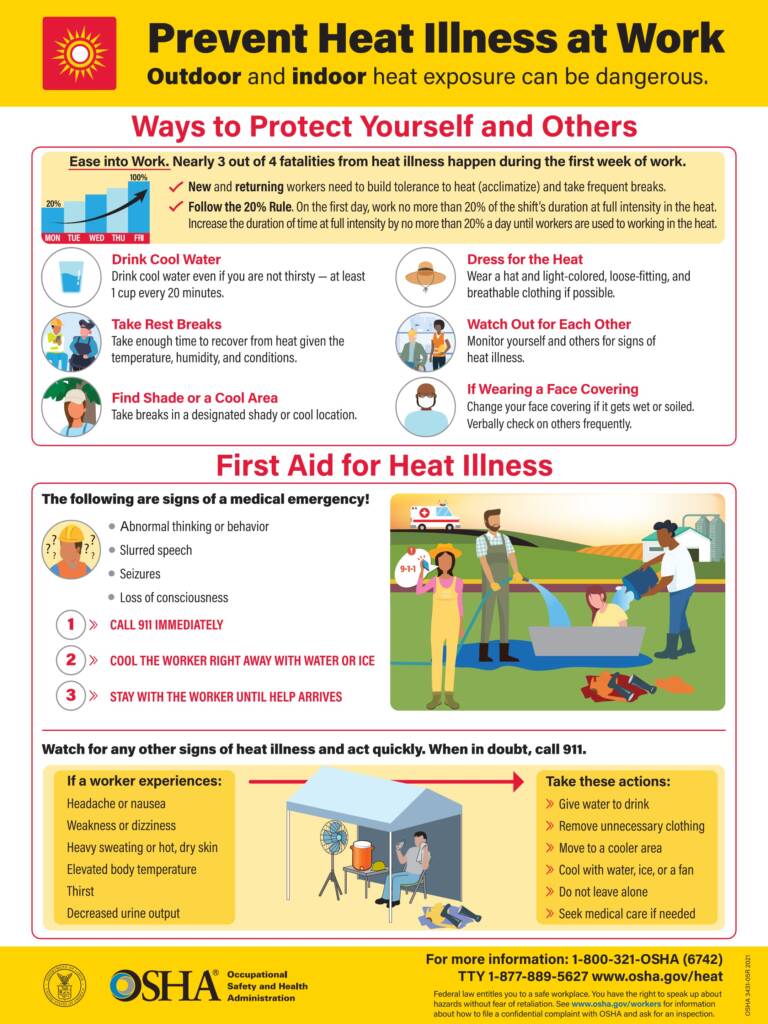
Breaks are also essential. When heat and humidity increase, the body needs time to recover, especially during physically demanding work or when wearing PPE that may restrict airflow. Taking breaks in shaded, and cooled areas helps reduce heat buildup and allows employees to reset before returning to their tasks. Supervisors and teams should also consider adjusting schedules or increasing rest periods during the hottest parts of the day whenever possible. Depending on your job classification, please refer to the Health and Safety Plan located on the intranet, Appendix A Section 4 #6, for information on the National Emphasis Program for OSHA regarding rest periods for heavy work duty and moderate/light work duty when working in extreme temperatures.
Proper clothing and sun protection can make a meaningful difference in preventing heat-related illness. Loose-fitting, light-colored, and breathable clothing can help the body regulate temperature, while wide-brimmed hats, UV-absorbent sunglasses, and sunscreen with an SPF of at least 30 can help protect against sun exposure. TPDers should also consider moisture-wicking fabrics or cooling gear when appropriate, while still ensuring that all required PPE remains in place and suitable for the work environment.
It is important for everyone to recognize the warning signs of heat-related illness. Heat rash and heat cramps may be early indicators that the body is struggling, while heat exhaustion can include symptoms such as headache, dizziness, weakness, nausea, heavy sweating, thirst, irritability, elevated body temperature, or decreased urine output. Heat stroke is a medical emergency and may involve confusion, slurred speech, seizures, loss of consciousness, hot dry skin, or a very high body temperature. If heat stroke is suspected, call 911 immediately, move the person to a cooler shaded area, stay with them, and begin cooling efforts while waiting for emergency assistance.
Summer heat safety is a shared responsibility. Each of us should monitor our own condition, check in with coworkers, speak up when something does not feel right, and support a culture where, taking a water break or cooling down is viewed as a smart safety decision. With enough knowledge, we can reduce the risk of heat-related illness and help keep TPD employees safe, healthy, and ready to keep moving forward together.